Research Use Only: This product is supplied for laboratory research and in-vitro studies. Not for human or veterinary administration.
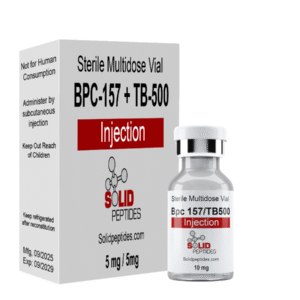
TB-500 (Thymosin Beta-4) (43aa)
- Thymosin Beta-4 Derivative: 43-amino acid peptide (Ac-SDKPDMAEIEKFDKSKLKKTETQEKNPLPSKETIEQEKQAGES-OH), derived from naturally occurring thymosin beta-4 (70-80% of beta-thymosins), 2,000+ publications, N-terminal acetylation for enhanced stability
- Multi-Pathway Regeneration: G-actin sequestration (Kd 0.5-0.7 μM), cell migration promotion, VEGF upregulation via Wnt/β-catenin/Lef-1, angiogenesis, PI3K/Akt/eNOS survival pathway, anti-fibrotic via TGF-β1 suppression
- Clinical Status: No FDA-approved human drug, all therapeutic data preclinical (wound healing, cardiac repair, pulmonary fibrosis, Alzheimer's neuroprotection), extensive safety profile in animal models
- Mechanistic pathway studies
- In vitro receptor profiling
- HPLC verified identity and purity
Ships same-day if ordered before 2PM EST
Research Overview
TB-500 is a synthetic 43-amino-acid peptide corresponding to the thymosin beta-4 (Tβ4) sequence motif widely studied in cytoskeletal biology. In experimental systems, thymosin beta peptides are used to interrogate actin monomer (G-actin) sequestration, actin filament (F-actin) dynamics, and downstream processes that depend on cytoskeletal remodeling, including cell migration, neurite outgrowth, endothelial cell behavior, and extracellular matrix (ECM) remodeling. Reported preclinical literature includes cell-based assays and animal studies examining oxidative stress signaling, angiogenic transcriptional programs, epithelial and stromal re-epithelialization kinetics, and tissue remodeling endpoints.
Preclinical Research Summary
1. Neural Tissue Models & Support-Cell Biology
In rat spinal cord injury models, thymosin β4 has been evaluated using histological, vascular, and functional/behavioral readouts, with study designs interrogating cellular responses in injured tissue and associated remodeling endpoints[1]. Review literature further discusses thymosin β4 within regenerative biology frameworks for neurological injury models, emphasizing mechanistic hypotheses and preclinical evidence streams rather than clinical translation[2].
In spinal cord–derived neural stem/progenitor cell models, thymosin beta 4 has been studied under oxidative-stress conditions with pathway-level readouts mapped to the TLR4/MyD88 axis, including changes in oxidative mediator levels and viability-associated measures in vitro[3].
2. Vascular Biology, Angiogenic Signaling, and ECM Remodeling
Thymosin β4 has been reported as a modulator of angiogenic programs in preclinical systems, with literature describing relationships to VEGF-associated signaling and vascular development/remodeling endpoints[4]. Proposed mechanistic contexts include cell migration, ECM remodeling, and endothelial/pericyte-associated processes, evaluated using model-specific molecular and histologic readouts.
3. Hair Follicle and Skin-Appendage Model Readouts
Mouse studies involving altered thymosin beta 4 expression have reported differences in hair follicle-associated phenotypes, and thymosin beta 4 has been evaluated for effects on stem-cell migration and differentiation readouts in these experimental contexts[5].
4. Infection Models and Adjunct Biology with Antibiotics
In a mouse model of Pseudomonas aeruginosa-induced keratitis, thymosin beta 4 has been studied in combination with ciprofloxacin, with outcome measures including bacterial colony forming units (CFUs), neutrophil infiltration, and oxidative/inflammatory mediator readouts after defined treatment windows[6].

A. Number of colony forming units (CFUs) of bacteria after 5 days of treatment. Note that none are detectable when ciprofloxicin is combined with TB-4.
B. Shows number of neutrophils in the corneas of treated mice, an indication of inflammation.
C. Measure of reactive oxygen species in corneas of mice after 5 days of treatment.
D. Nitrate levels from corneal lysates.
Source: PubMed
5. Cardiovascular and Renal Model Systems
Literature has examined thymosin β4 and related pathway components in cardiovascular and renal model contexts, including angiogenic remodeling, endothelial migration phenotypes, inflammatory mediator profiles, and fibrosis-associated molecular markers, depending on the model and experimental endpoint selection[7]. Injectable hydrogel formulations incorporating collagen and thymosin β4 have been evaluated in myocardial ischemia-related experimental paradigms with readouts such as angiogenesis-associated markers and epicardial cell migration endpoints in preclinical designs[8].
6. Neurodegeneration-Adjacent Cellular Models and Proteostasis
In HT22 cell experiments using prion peptide (PrP 106–126) exposure, thymosin beta 4 has been studied for effects on autophagy-associated pathways and signaling readouts under defined in vitro conditions[9].
7. Summary
Across preclinical literature, TB-4/TB-500-related experimental work is commonly positioned around cytoskeletal regulation (actin monomer sequestration), migration-associated phenotypes, stress-response signaling, and tissue remodeling endpoints. Interpretation of outcomes is model-dependent and should be evaluated within each study’s dosing regimen, route, timecourse, and assay selection. This material is presented for scientific context and does not imply suitability for any non-laboratory purpose.
This product is intended exclusively for in vitro laboratory research by qualified professionals. Not for human consumption. Not approved by the FDA.
Published Research Briefs
Our research team has published evidence-checked briefs covering the science behind this compound. Each brief reviews primary sources and grades claims independently.